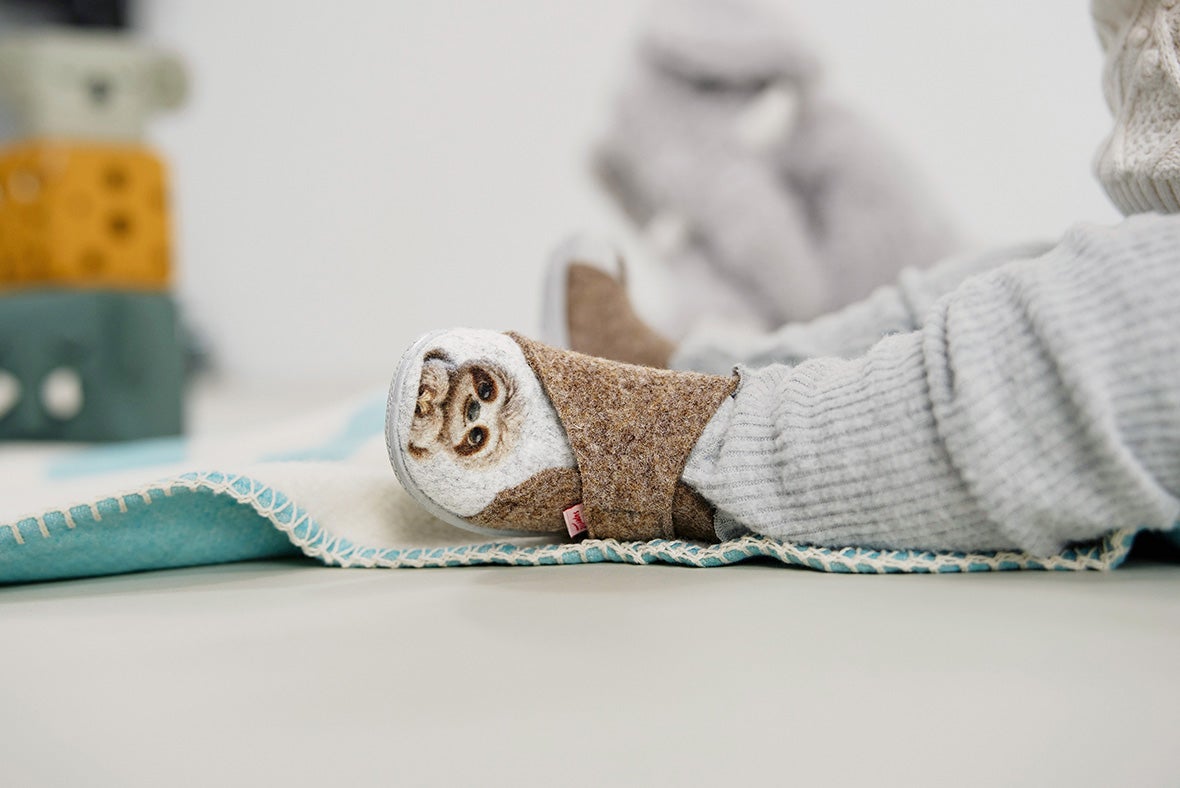
Why do babies need different shoes at home than when they're outside?
Baby slippers are specifically designed for indoor use and differ in construction from outdoor shoes. Smooth floors such as hardwood, tile, or laminate present different challenges than sidewalks or playgrounds. That’s why many baby slippers feature flexible, slip-resistant soles that support natural movement while providing traction. For walks or outdoor excursions, however, baby sneakers or baby sandals are more suitable.
What features are particularly important in baby slippers?
Baby slippers should fit well, provide enough room for the toes and not restrict movement. A slip-resistant sole is also important for use on smooth floors. Many styles feature velcro closures so they can be easily adjusted and put on. It’s also crucial that the slippers match the child’s current shoe size, since kids' feet grow quickly during their first few years of life.
In what situations are baby slippers appropriate?
Baby slippers are designed for all indoor activities, such as playing at home, at daycare, during visits, or on other heated floors. They support kids as they take their first steps and offer protection from cool or slippery surfaces. Once activities take place primarily outdoors, it’s recommended to switch to babysneakers, baby boots or babysandals, which are designed for a variety of weather conditions and surfaces.